2026-09-09 · Frank Reilly
Roll Off Rental Tips for Spring Flood Cleanup in Lambertville NJ
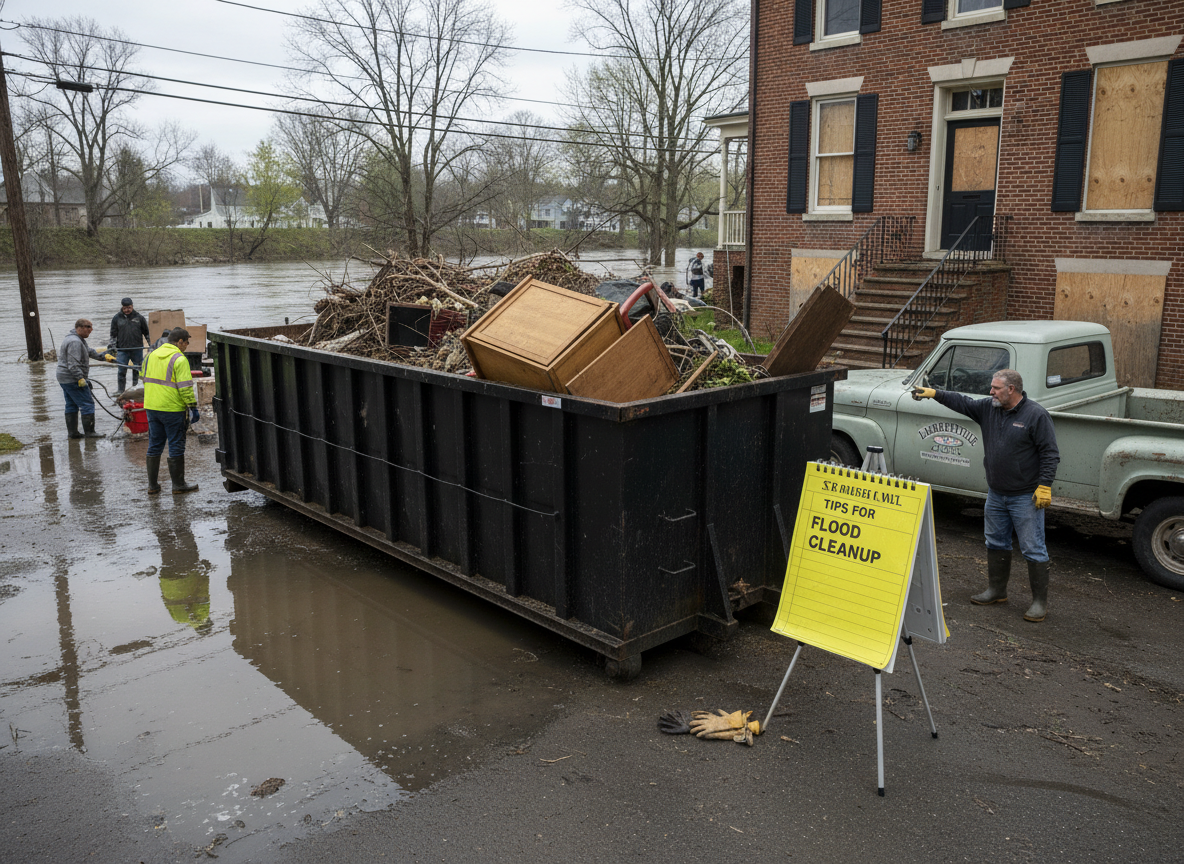
Spring rains after cold winters frequently push water from the Delaware and Raritan Canal into basements and yards across Lambertville. Roll off rentals work best when sized to the actual debris volume rather than guessed at, with 20-yard containers handling most single-home flood jobs in the Lambertville Historic District while 30-yard units suit properties closer to Stockton or New Hope that collect extra sediment and furniture.
Evaluating Debris Volume After Canal Flooding
Lambertville's older housing stock built before 1900 often features stone foundations and narrow lots that trap mud and saturated drywall during spring events. Walk each level of the home once water recedes and separate items by weight: waterlogged carpet and insulation fill space quickly while appliances take less room but add weight limits. Count how many pickup-truck loads the material would require, then add 20 percent because wet debris compacts less than dry waste. Properties near Lambertville Station tend to collect more fine silt that behaves like heavy soil, so operators recommend weighing a sample load before ordering. This step prevents the common mistake of ordering too small a container and paying for a second delivery during peak spring demand.
Placement Rules on Narrow Lambertville Streets
Hunterdon County roads in the historic district leave little room for large trucks, so roll off placement must account for the slope toward the canal and overhead wires on many blocks. Choose a level spot on the driveway or street that allows the truck at least 60 feet of straight approach; avoid soft grass that saturates in spring. Check with the city for any temporary no-parking signs needed near the Lambertville Historic District, and confirm the container will not block access to neighboring homes built close together. In Flemington-adjacent areas with steeper driveways, operators often use plywood sheets under the wheels to prevent sinking once the container fills with wet material. These steps keep the rental period short and avoid extra fees for repositioning.
Timing Deliveries Around Spring Weather Patterns
Humid continental conditions bring warm days that dry debris quickly followed by sudden showers, so schedule the roll off drop-off for the morning after a dry forecast window. Most flood jobs in Lambertville finish loading within three to five days when crews work steadily, but containers left longer risk overflow from additional rain. Coordinate with 24/7 availability so the unit arrives before crews start demolition and leaves the same day loading finishes. Residents near the canal often stage material on tarps first to let water drain, which reduces the final weight and keeps the container under highway limits when it heads to the landfill.
Sorting Materials for Efficient Removal
Separate metal appliances, wood, and general trash as you pull items from flooded rooms because mixed loads sometimes require special handling fees. Yard waste such as soaked landscaping and tree limbs belongs in a dedicated yard waste removal container when volumes exceed what fits alongside household debris. In the Lambertville Historic District, crews also pull out original plaster and lath that cannot be salvaged, creating a steady stream of dense material that benefits from a mid-sized roll off rather than multiple smaller hauls. This sorting reduces the total number of containers needed and keeps costs predictable for homeowners working through insurance claims.
Continuing With Related Project Planning
Once the flood cleanup container leaves, many Lambertville homeowners turn to interior repairs that generate new debris. Reading Managing Construction Debris from Historic District Projects in Lambertville helps plan the next roll off rental without repeating the same sizing errors. The same principles of site access and weight tracking apply when replacing floors or walls damaged by the spring event.